Readings & Resources
A curated library of high-signal readings, frameworks, tools, and tactical skills for applying AI across management, operations, finance, and marketing.
Featured

Visualizing Attention and Transformers in AI Models ↗
Grant Sanderson's acclaimed geometric visualization of attention heads, vector matrices, and how context is computed inside transformers.
Provides immediate visual intuition for token windows, prompt structure efficiency, and contextual degradation.
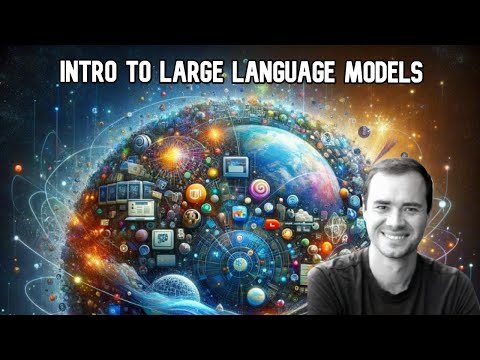
Intro to Large Language Models: Core Architecture & Systems ↗
Andrej Karpathy's comprehensive breakdown of how LLMs are pre-trained, fine-tuned, safeguarded, and orchestrated in production.
The gold standard mental model for managers and technical teams evaluating model capabilities, security, and integration limits.
Anthropic Interactive Prompt Engineering Tutorial ↗
Comprehensive course covering prompt evaluation, XML tags for structuring context, multi-shot prompting, and chain-of-thought for complex reasoning.
The single best foundation for managers who need to build reproducible prompts rather than ad-hoc chat.

How Leaders Should Manage AI in the Workplace ↗
Frameworks for delegating tasks to AI agents while maintaining accountability, team trust, and human verification checkpoints.
Provides a practical governance model for managers balancing speed with risk.

Centaurs and Cyborgs on the Jagged Frontier ↗
Empirical study on how business consultants using AI divide tasks: integration (cyborg) vs division of labor (centaur).
Shows concrete mental models for how high-performing teams actually integrate LLMs into daily desk work.

OpenAI Official Prompt Engineering Guide ↗
Six core strategies for getting better results: clear instructions, reference text, splitting complex tasks, and give the model time to think.
A concise reference sheet every professional should keep pinned when drafting prompts for documents and data analysis.

Piloting Double-Blind AI Evaluations: Rigorous Benchmark Governance ↗
Google DeepMind's breakthrough protocol for blind human evaluations to eliminate bias and reliably measure frontier model capabilities.
Sets the enterprise standard for establishing objective, unbiased evaluation criteria when assessing AI models.

TimesFM-3: Zero-Shot Foundation Model for Multivariate Time-Series Forecasting ↗
Google's pre-trained foundation model for financial, inventory, and operational forecasting that works out-of-the-box across varied business data.
A major leap for FP&A and supply chain teams: accurate time-series forecasts without complex model training pipelines.

Perplexity Brain: Agentic Memory as a Living Knowledge Wiki ↗
How agentic memory layers automatically distill everyday operational work into a searchable, auto-updating organizational knowledge wiki.
Solves internal documentation decay by letting AI maintain SOPs and organizational knowledge automatically.
By Field
Management
Governance, executive decision-making, and organizational AI adoption.
How Leaders Should Manage AI in the Workplace ↗
Frameworks for delegating tasks to AI agents while maintaining accountability, team trust, and human verification checkpoints.
Provides a practical governance model for managers balancing speed with risk.

The Lenny 100: Fastest-Growing Startups & Operational Talent Trends ↗
Curated index of 100 high-growth tech companies, analyzing product, growth, and operations hiring trends across the tech ecosystem.
Key intelligence for managers assessing organizational design, hiring velocity, and compensation benchmarks.

Building Multi-Stakeholder Infrastructure for Precision Care ↗
Case study on orchestrating shared data standards, institutional governance, and cross-border technology alliances.
A masterclass in executive stakeholder alignment for complex, highly-regulated technology initiatives.
Operations
Workflow automation, SOPs, and operational scale.

APQC Process Performance & Workflow Standardization ↗
Standardized process taxonomies and operational benchmark metrics for evaluating process efficiency and automation targets.
Before applying AI to a business workflow, APQC gives you the standard baseline steps and metrics.
Perplexity Brain: Agentic Memory as a Living Knowledge Wiki ↗
How agentic memory layers automatically distill everyday operational work into a searchable, auto-updating organizational knowledge wiki.
Solves internal documentation decay by letting AI maintain SOPs and organizational knowledge automatically.

NVIDIA Nemotron 3.5 Lightning & NeMo Switchyard: Scalable Agent Infrastructure ↗
NVIDIA's efficient router switchyard and lightweight reasoning models optimized for high-throughput enterprise agent orchestration.
Provides the infrastructure blueprint for running multi-step business workflow agents at fraction of standard API costs.

Mercor: Automated AI-First Talent Sourcing & Technical Vetting ↗
AI-driven recruiting platform utilizing structured conversational interviews and portfolio evaluation to source and place global candidates.
Demonstrates the future of operations and recruiting: compressing weeks of candidate screening into automated, objective assessments.

Scaling Organizational Knowledge Bundles with Knowledge Catalog ↗
How to package, discover, and govern data products and contextual knowledge bundles across decentralized business teams.
Solves data fragmentation across business units so AI assistants and analysts have clean, verified context.
Finance & FP&A
Variance analysis, predictive forecasting, and budget modeling.

The Economic Potential of Generative AI: The Next Productivity Frontier ↗
In-depth breakdown of value creation across marketing, customer operations, finance, and product management.
Essential data and benchmark figures for business cases, budget justifications, and headcount planning.
TimesFM-3: Zero-Shot Foundation Model for Multivariate Time-Series Forecasting ↗
Google's pre-trained foundation model for financial, inventory, and operational forecasting that works out-of-the-box across varied business data.
A major leap for FP&A and supply chain teams: accurate time-series forecasts without complex model training pipelines.

Mosaic: Real-Time FP&A & Strategic Financial Modeling ↗
Automated strategic finance platform integrating ERP, CRM, and billing systems to enable real-time variance analysis and predictive headcount planning.
Exemplifies modern FP&A tooling that bridges automated transaction ingestion with executive scenario modeling.
Marketing & Growth
Market research, customer intelligence, and strategy.

AI in Marketing Strategy: Moving Beyond Copy Generation ↗
Strategic playbooks for using AI in customer segmentation, audience research synthesis, and positioning experimentation.
Helps growth and marketing leaders shift from superficial AI copy generation to deep market insight workflows.
Cross-Cutting
Prompting standards, evaluation, safety, and infrastructure.
Visualizing Attention and Transformers in AI Models ↗
Grant Sanderson's acclaimed geometric visualization of attention heads, vector matrices, and how context is computed inside transformers.
Provides immediate visual intuition for token windows, prompt structure efficiency, and contextual degradation.
Intro to Large Language Models: Core Architecture & Systems ↗
Andrej Karpathy's comprehensive breakdown of how LLMs are pre-trained, fine-tuned, safeguarded, and orchestrated in production.
The gold standard mental model for managers and technical teams evaluating model capabilities, security, and integration limits.
Anthropic Interactive Prompt Engineering Tutorial ↗
Comprehensive course covering prompt evaluation, XML tags for structuring context, multi-shot prompting, and chain-of-thought for complex reasoning.
The single best foundation for managers who need to build reproducible prompts rather than ad-hoc chat.
Centaurs and Cyborgs on the Jagged Frontier ↗
Empirical study on how business consultants using AI divide tasks: integration (cyborg) vs division of labor (centaur).
Shows concrete mental models for how high-performing teams actually integrate LLMs into daily desk work.
OpenAI Official Prompt Engineering Guide ↗
Six core strategies for getting better results: clear instructions, reference text, splitting complex tasks, and give the model time to think.
A concise reference sheet every professional should keep pinned when drafting prompts for documents and data analysis.
Piloting Double-Blind AI Evaluations: Rigorous Benchmark Governance ↗
Google DeepMind's breakthrough protocol for blind human evaluations to eliminate bias and reliably measure frontier model capabilities.
Sets the enterprise standard for establishing objective, unbiased evaluation criteria when assessing AI models.

DSCI Annual Report 2025-26: Enterprise Cybersecurity & AI Data Governance ↗
In-depth benchmark covering national and global cybersecurity trends, AI data protection frameworks, privacy compliance, and threat mitigation.
A must-read governance baseline for leaders auditing AI data pipelines, sensitive PII handling, and vendor security posture.

OpenAI: Model Supply Chain Security & Defense-in-Depth ↗
Analysis of model artifact security, vulnerability management, and defensive governance for enterprise AI deployments.
Practical principles for technology leaders to safeguard enterprise AI workflows against third-party supply chain risks.

Wire It, Run It, Deploy It: Rapid AI Workflow UIs in Gradio ↗
Practical guide for structuring multi-step model workflows, building interactive input/output blocks, and sharing functional internal tools.
Enables non-engineers and product managers to prototype and test custom AI tools without full stack engineering overhead.

Anthropic: Model Hardware Standards & Compute Economics ↗
Research preview establishing standardized benchmark protocols for model throughput, memory efficiency, and deployment economics.
Provides transparent criteria for finance and IT leaders evaluating the total cost of ownership of frontier model infrastructure.

How Inference Endpoints & Embeddings Power Semantic Document Search ↗
Architectural breakdown of deploying fast vector embeddings and semantic search on Papers with Code.
A clear blueprint for operations teams building internal document search and question-answering over large PDF libraries.

Git at Any Scale: High-Performance Repository & Context Management ↗
Technical insights from Cursor on managing multi-gigabyte repositories, instant context indexing, and virtualized file trees.
Useful reference for how modern AI agents index large codebases and knowledge trees without latency bottlenecks.
AG-UI Channel Implementation: Agent-to-UI Streaming Interfaces ↗
Pull request implementation demonstrating structured event channels for streaming agentic actions into interactive user interfaces.
Practical architecture for product managers designing real-time interactive dashboards powered by AI agents.
All Resources
Visualizing Attention and Transformers in AI Models ↗
Grant Sanderson's acclaimed geometric visualization of attention heads, vector matrices, and how context is computed inside transformers.
Provides immediate visual intuition for token windows, prompt structure efficiency, and contextual degradation.
Intro to Large Language Models: Core Architecture & Systems ↗
Andrej Karpathy's comprehensive breakdown of how LLMs are pre-trained, fine-tuned, safeguarded, and orchestrated in production.
The gold standard mental model for managers and technical teams evaluating model capabilities, security, and integration limits.
Piloting Double-Blind AI Evaluations: Rigorous Benchmark Governance ↗
Google DeepMind's breakthrough protocol for blind human evaluations to eliminate bias and reliably measure frontier model capabilities.
Sets the enterprise standard for establishing objective, unbiased evaluation criteria when assessing AI models.
TimesFM-3: Zero-Shot Foundation Model for Multivariate Time-Series Forecasting ↗
Google's pre-trained foundation model for financial, inventory, and operational forecasting that works out-of-the-box across varied business data.
A major leap for FP&A and supply chain teams: accurate time-series forecasts without complex model training pipelines.
Perplexity Brain: Agentic Memory as a Living Knowledge Wiki ↗
How agentic memory layers automatically distill everyday operational work into a searchable, auto-updating organizational knowledge wiki.
Solves internal documentation decay by letting AI maintain SOPs and organizational knowledge automatically.
NVIDIA Nemotron 3.5 Lightning & NeMo Switchyard: Scalable Agent Infrastructure ↗
NVIDIA's efficient router switchyard and lightweight reasoning models optimized for high-throughput enterprise agent orchestration.
Provides the infrastructure blueprint for running multi-step business workflow agents at fraction of standard API costs.
Mosaic: Real-Time FP&A & Strategic Financial Modeling ↗
Automated strategic finance platform integrating ERP, CRM, and billing systems to enable real-time variance analysis and predictive headcount planning.
Exemplifies modern FP&A tooling that bridges automated transaction ingestion with executive scenario modeling.
DSCI Annual Report 2025-26: Enterprise Cybersecurity & AI Data Governance ↗
In-depth benchmark covering national and global cybersecurity trends, AI data protection frameworks, privacy compliance, and threat mitigation.
A must-read governance baseline for leaders auditing AI data pipelines, sensitive PII handling, and vendor security posture.
The Lenny 100: Fastest-Growing Startups & Operational Talent Trends ↗
Curated index of 100 high-growth tech companies, analyzing product, growth, and operations hiring trends across the tech ecosystem.
Key intelligence for managers assessing organizational design, hiring velocity, and compensation benchmarks.
Mercor: Automated AI-First Talent Sourcing & Technical Vetting ↗
AI-driven recruiting platform utilizing structured conversational interviews and portfolio evaluation to source and place global candidates.
Demonstrates the future of operations and recruiting: compressing weeks of candidate screening into automated, objective assessments.
OpenAI: Model Supply Chain Security & Defense-in-Depth ↗
Analysis of model artifact security, vulnerability management, and defensive governance for enterprise AI deployments.
Practical principles for technology leaders to safeguard enterprise AI workflows against third-party supply chain risks.
Wire It, Run It, Deploy It: Rapid AI Workflow UIs in Gradio ↗
Practical guide for structuring multi-step model workflows, building interactive input/output blocks, and sharing functional internal tools.
Enables non-engineers and product managers to prototype and test custom AI tools without full stack engineering overhead.
Scaling Organizational Knowledge Bundles with Knowledge Catalog ↗
How to package, discover, and govern data products and contextual knowledge bundles across decentralized business teams.
Solves data fragmentation across business units so AI assistants and analysts have clean, verified context.
Anthropic: Model Hardware Standards & Compute Economics ↗
Research preview establishing standardized benchmark protocols for model throughput, memory efficiency, and deployment economics.
Provides transparent criteria for finance and IT leaders evaluating the total cost of ownership of frontier model infrastructure.
How Inference Endpoints & Embeddings Power Semantic Document Search ↗
Architectural breakdown of deploying fast vector embeddings and semantic search on Papers with Code.
A clear blueprint for operations teams building internal document search and question-answering over large PDF libraries.
Git at Any Scale: High-Performance Repository & Context Management ↗
Technical insights from Cursor on managing multi-gigabyte repositories, instant context indexing, and virtualized file trees.
Useful reference for how modern AI agents index large codebases and knowledge trees without latency bottlenecks.
Building Multi-Stakeholder Infrastructure for Precision Care ↗
Case study on orchestrating shared data standards, institutional governance, and cross-border technology alliances.
A masterclass in executive stakeholder alignment for complex, highly-regulated technology initiatives.
AG-UI Channel Implementation: Agent-to-UI Streaming Interfaces ↗
Pull request implementation demonstrating structured event channels for streaming agentic actions into interactive user interfaces.
Practical architecture for product managers designing real-time interactive dashboards powered by AI agents.
AI in Marketing Strategy: Moving Beyond Copy Generation ↗
Strategic playbooks for using AI in customer segmentation, audience research synthesis, and positioning experimentation.
Helps growth and marketing leaders shift from superficial AI copy generation to deep market insight workflows.
OpenAI Official Prompt Engineering Guide ↗
Six core strategies for getting better results: clear instructions, reference text, splitting complex tasks, and give the model time to think.
A concise reference sheet every professional should keep pinned when drafting prompts for documents and data analysis.
APQC Process Performance & Workflow Standardization ↗
Standardized process taxonomies and operational benchmark metrics for evaluating process efficiency and automation targets.
Before applying AI to a business workflow, APQC gives you the standard baseline steps and metrics.
The Economic Potential of Generative AI: The Next Productivity Frontier ↗
In-depth breakdown of value creation across marketing, customer operations, finance, and product management.
Essential data and benchmark figures for business cases, budget justifications, and headcount planning.
Centaurs and Cyborgs on the Jagged Frontier ↗
Empirical study on how business consultants using AI divide tasks: integration (cyborg) vs division of labor (centaur).
Shows concrete mental models for how high-performing teams actually integrate LLMs into daily desk work.
How Leaders Should Manage AI in the Workplace ↗
Frameworks for delegating tasks to AI agents while maintaining accountability, team trust, and human verification checkpoints.
Provides a practical governance model for managers balancing speed with risk.
Anthropic Interactive Prompt Engineering Tutorial ↗
Comprehensive course covering prompt evaluation, XML tags for structuring context, multi-shot prompting, and chain-of-thought for complex reasoning.
The single best foundation for managers who need to build reproducible prompts rather than ad-hoc chat.